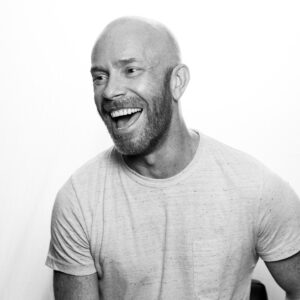
When Jamiah Hargins planted a small backyard garden in 2018, he wasn’t looking to spark a movement. He simply wanted to grow enough fresh produce for his family to eat well.
“I’d just had my first daughter, and so I really wanted to grow food so she could live a healthier life,” Jamiah says.
But before long, he was harvesting more produce than he could ever use. Rather than let it go to waste, Jamiah invited his neighbors to swap their surplus fruits and vegetables.
That first humble “crop swap” would become the seed of Crop Swap LA, an organization now at the forefront of a rapidly rising trend highlighted in Eventbrite’s 2026 Social Study.
We’ve dubbed it Show Up To Shape It. It reflects community-action events that create real-world impact, providing people with a space to connect, contribute, and create change together
From Backyard Experiment to Microfarm Movement

As the crop swap grew, so did the ambition. Jamiah launched the West Adams Farmers Market, and when the pandemic shuttered it, he pivoted fast. Crop Swap LA secured an LA2050 grant and transformed a front yard into the Asante Microfarm—a water-recycling, solar-powered, fully regenerative agricultural system.
Jamiah’s hyper-local vision has sustainability at its heart: food should be grown and consumed locally to reduce reliance on inefficient, water and carbon-intensive global supply chains.
Jamiah explains: “People want to know what they’re eating. They want to feel in control of their food sources, especially as grocery prices rise, so there’s definitely a demand for people wanting to become food independent.”
The idea proved contagious, and soon more residents reached out wanting garden installations in their own front yards. In 2022, the organization opened its largest microfarm yet, which has since become a thriving hub for learning, composting, harvesting, and gathering.
Why Community-Action Events Are Surging in Popularity

Each microfarm is more than a food source. It’s a demonstration of what’s possible when neighbors reclaim unused space and reimagine it as a community asset.
Jamiah believes the growing trend of community-action events comes from a desire for independence, transparency, and connection.
The Urban Survival Workshops that he and his team run tap directly into that desire. What began as four sessions has become a fully booked, ever-expanding annual program.
“It’s good to know the demand is there, and that we are able to fulfill a need,” Jamiah says.
Workshop topics range from the basics to specialized sessions, such as growing food in small spaces or cultivating your own medicinal plants. Each workshop is hands-on, deeply practical, and designed so attendees can walk away able to start growing immediately.
They are also social. Participants meet neighbors, trade tips, share seeds, and often stay in touch long after the class ends. For many, it’s the first time they’ve found a community of people who share their values around sustainability and food justice.
“People are finding other like-minded people in their area,” Jamiah says. “Everyone has the same interest in wanting to grow their own food. They’re connecting, and there’s always a whole bunch of side conversations. They leave feeling very inspired.”
Regeneration at the Heart of Every Microfarm

Crop Swap LA’s impact is hyperlocal by design. Their weekly CSA deliveries are restricted to those who live within a one-mile radius of each microfarm. It’s a deliberate strategy that ensures the freshest food stays closest to its source and that neighbors feel genuinely connected to the systems feeding them.
But Jamiah’s vision extends beyond food alone. Each microfarm has regenerative systems, and teaching these systems is just as important as the produce grown.
“As well as inspiring and teaching people how to grow their own food, we also share the process of rainwater capture and irrigation,” Jamiah explains. “There are lots of benefits to storing rainwater and using it in case of water emergencies like droughts.”
“We also use solar power for all of our microfarms, and we compost.”
The outcome is tangible. Workshop alumni frequently share photos of their first harvests or reach out for advice as their gardens flourish. Some have even earned Crop Swap LA’s Urban Food Grower certificate—a homegrown accolade that symbolizes commitment and pride in learning to grow your own food.
Scaling Up a Movement

Looking ahead, Crop Swap LA will move to host workshops on a monthly basis rather than quarterly, and hopes to expand into online classes for nationwide audiences.
At a time when rising costs, climate concerns, and a sense of social fragmentation are affecting communities everywhere, the success of Crop Swap LA underscores a broader cultural shift.
People aren’t just craving entertainment or education—they’re craving impact and connection. Events rooted in community action offer exactly that: a chance to participate, connect, learn, and leave with both skills and a sense of meaning.
Discover how to bring this year’s Social Study trends to life:
- Off-Script Energy: How to Bring the Unexpected to Your Next Event
- Soft Socializing: How to Enable Connection Without Pressure
- Show Up to Shape It: How to Empower Attendees to Make a Difference
- Neighborhood Revival: How to Win With Local Events
- Layers, Not Labels: How to Channel the Power of Event Mashups